What the Football World Is Saying — 2026 World Cup’s 48-Team Leap
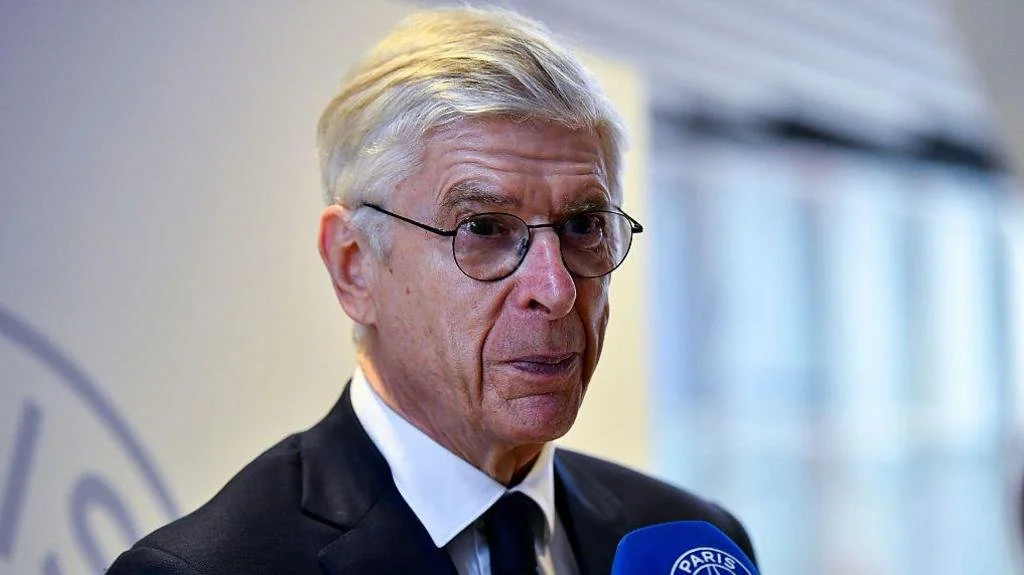
Former football manager and now FIFA’s Chief of Global Football Development, Arsene Wenger
The 2026 World Cup will mark a dramatic shift in global football: for the first time, the tournament will feature 48 teams instead of the traditional 32. That change has stirred reactions across the sport — from cautious optimism to bold hope. We bring you what some of football’s most respected voices are saying about this historic decision.
“It’s a natural evolution” — Words from Arsène Wenger
Long before the World Cup draw in Washington, D.C., former manager and current global-development head at FIFA, Arsène Wenger, made it clear he supports the expansion. In his words:
“I believe that 48 teams is the right number. It’s (just) less than 25% of 211 countries who are affiliated to FIFA. That means one team out of four has a chance to participate.” (Inside FIFA)
Acknowledging concerns about diluting quality, Wenger responded with confidence in the new global balance:
“I’m quite optimistic, because to qualify you need to beat the teams of your confederation, and that’s a sign of quality … The teams are not there by coincidence because they’ve been invited.” (ESPN.com)
He also referenced recent youth-level tournaments as proof that expanding the field doesn’t necessarily lower standards:
“We had the same question to answer at the U17 World Cup … and we were positively surprised [at the quality].” (ESPN.com)
Growth, Inspiration and Legacy — From Jill Ellis (FIFA Official)
For many football nations — especially emerging ones — the expansion represents more than just more matches: it’s a chance to grow the sport’s global footprint. Jill Ellis, former US Women’s National Team coach and now FIFA’s Chief Football Officer, shared her vision:
“I think the power of the World Cup is … you have the outside world watching, but what does it do to the local fan? What does it do to the player, the people that have never seen the game before?” (Inside FIFA)
She stressed that increased participation could help inspire a new generation of players, fans and communities worldwide:
“The fanbase will increase, the attention will increase … you want kids to pick up the ball and go out and be inspired … I think … creating the next generation … that’s the most important thing [about] the legacy of a World Cup.” (Inside FIFA)
What This Means — For Global Football … and for Africa
With these voices backing the expansion, the message is clear: 48 teams don’t just spell more matches — they signal opportunity, growth, and a broader playing field. For countries in Africa, Asia, or other regions that have struggled for consistent World Cup representation, this could be a turning point.
• Teams will reach the tournament by merit, not just by reputation. As Wenger put it, “beating teams in your confederation” is the path forward — which means success depends on performance.
• For growing football nations, the expanded World Cup can act as a catalyst for development — boosting interest, infrastructure, and youth participation.
• For fans and communities, it’s a chance to see their nations on the global stage. As Ellis noted, representation matters — and the new format could bring football dreams to more corners of the world.
The Other Side: Challenges Remain — But the Tone Is Hopeful
Of course, expanding the tournament brings challenges: scheduling, travel, climate, pitch quality, competitive balance. But according to Wenger, lessons from recent major tournaments — including youth competitions — suggest football may be ready:
“Quality-wise, the difference between different countries has been reduced … all countries … do a lot of education work … and that’s why we see new teams at the World Cup.” (Inside FIFA)
That optimism frames 2026 not simply as an expansion — but as a transformation.
Why This Matters for Front3 & African Fans
For readers of Front3 — many from South Africa and across Africa — this revamped World Cup could be a game-changer. It means more nations from the continent might qualify, more players might emerge, and more stories might be told on the global stage.
It means football’s reach is growing — and with voices like Wenger and Ellis supporting it, this expansion could produce some of the most memorable World Cup editions ever.
