Reflections on Basetsana’s Elimination
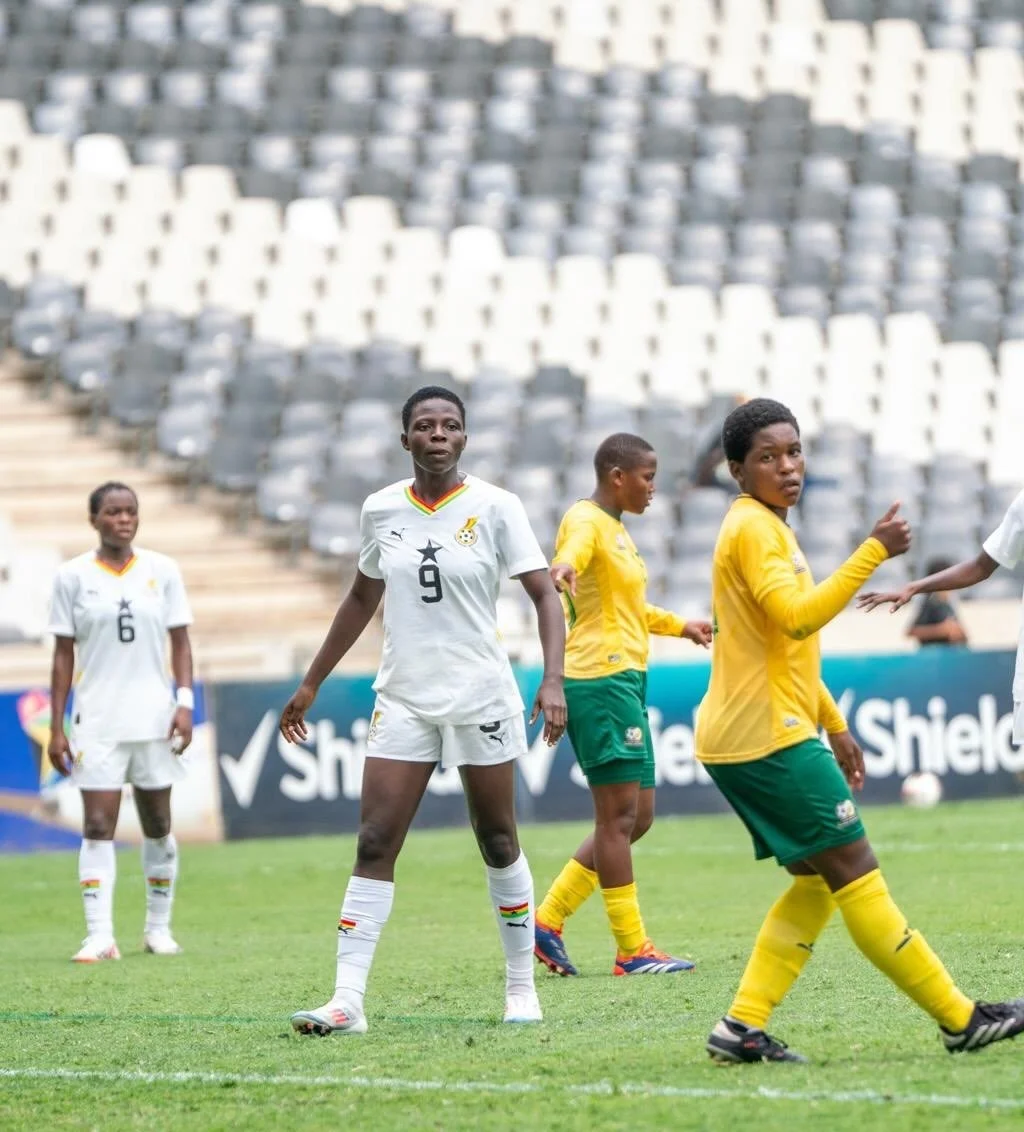
SA Women U20 vs Ghana Women at Mbombela - 14/02/2026
Progress Amid Challenges — and Why Investment Is Now Crucial
South Africa’s women’s U-20 national team, Basetsana, may have exited the 2026 FIFA U-20 Women’s World Cup qualifiers at the hands of Ghana’s Black Princesses on a narrow 3–2 aggregate, but the result tells only part of the story.
While the second leg at Mbombela Stadium proved emotionally and tactically demanding, the broader campaign points to a team moving in the right direction. This was not a collapse — it was a competitive elimination that exposed both progress made and gaps that still need addressing.
The Campaign in Context: Results That Show Growth
Basetsana’s journey through the qualifiers demonstrated tangible improvement, particularly in consistency and attacking cohesion.
Second Round: A commanding 9–0 aggregate victory over Eswatini
Final Round: A tightly contested 3–2 aggregate loss to Ghana
These performances reflected a side with better structure, improved ball circulation, and greater confidence in possession compared to previous cycles.
The 2–2 draw in Accra during the first leg against Ghana was especially telling. Twice coming from behind away from home, Basetsana showed resilience and tactical maturity against one of Africa’s strongest youth programmes.
The Decisive Second Leg: Fine Margins at Mbombela
The return leg at Mbombela Stadium highlighted both promise and limitation.
Basetsana controlled possession for long periods but struggled to convert pressure into clear-cut chances. Ghana’s ability to strike in transition exposed lingering defensive vulnerabilities, while South Africa’s lack of cutting edge in the final third ultimately proved costly.
Contributing factors included:
Limited squad depth in key areas
Inexperience in high-pressure knockout scenarios
The psychological weight of chasing the game at home
This was not a failure of effort, but rather a lesson in managing decisive moments at elite youth level.
A Broader Trajectory: Youth Progress Feeding the Senior Game
Basetsana’s evolution cannot be viewed in isolation. South Africa has seen a steady upward trajectory in women’s football development.
Several players from recent U-20 cycles have progressed to Banyana Banyana, who reached the Last 16 at the 2023 FIFA Women’s World Cup.
Domestic pathways, particularly through the Hollywoodbets Super League, have strengthened the bridge between youth and senior football.
Compared to past generations, today’s Basetsana are more tactically aware, physically prepared, and exposed to higher competitive standards.
The Structural Gap: Why Ghana Still Edges It
Despite the progress, the tie against Ghana underlined a familiar reality in African women’s youth football.
Traditional powerhouses like Ghana and Nigeria benefit from:
Consistent year-round youth programmes
Regular international exposure
Deeper investment in coaching, sports science, and player welfare
By contrast, South Africa’s U-20 setup often operates with limited preparation windows, fewer international friendlies, and constrained resources. The difference is not talent — it is infrastructure and continuity.
The Investment Question: Turning Progress into Sustainability
To convert promise into consistent qualification success, targeted investment is essential.
Key priority areas include:
1. Facilities and Infrastructure
Expanding regional academies with access to quality pitches, recovery facilities, and performance analysis tools.
2. Talent Identification and Coaching
Improved scouting networks — particularly in rural and underserved areas — and stronger investment in coach education.
3. Competitive Exposure
Regular international friendlies and youth tournaments to build experience in knockout football environments.
4. Holistic Player Support
Educational support, nutrition programmes, and mental health resources to retain talent and reduce dropout rates.
Such measures would not only strengthen Basetsana, but also reinforce the pipeline feeding the senior national team.
Conclusion: A Step Forward, Not a Step Back
Basetsana’s exit from the 2026 U-20 World Cup qualifiers may sting, but it should be viewed as part of a broader upward curve rather than a setback.
The narrow defeat to Ghana confirmed that South Africa is closing the gap — but also that sustained investment is the key to crossing it. With the right structural backing, Basetsana can evolve from competitive contenders into consistent continental challengers.
For South African women’s football, this campaign was not an ending — it was a signal of what is possible next.
